Spreadex Verification and KYC for Existing UK Users
 Available in GB
Spreadex UK Guide
Existing-account verification
Verification can still matter for an existing Spreadex account even though the casino product has closed. The closure notice says accounts and funds remain accessible through the continuing Sports platform, but that does not remove the operator’s identity, payment-ownership or regulatory checks. For UK users, the safest way to understand a verification request is to separate the general rule from the exact evidence requested in your own case.
Spreadex’s current public pages do not provide a definitive post-closure casino document checklist or a guaranteed KYC completion time. No universal checklist or guaranteed completion time is stated. The regulatory framework and current public Spreadex information still provide a practical basis for responding if verification affects account access or a withdrawal.
Table of Contents
- Why verification can still appear after the casino closure
- What Spreadex currently says about identity checks
- What the UK Gambling Commission requires
- Verification and withdrawals: the key consumer-protection rule
- Do not rely on a universal Spreadex document checklist
- A practical checklist when Spreadex asks for verification
- Source of funds is not the same as basic identity verification
- What if verification is blocking account access?
- What the casino closure does not prove about KYC
- Official reference pages
- Spreadex verification after casino closure
- Spreadex Account After the Casino Closure: Access and Next Steps
Why verification can still appear after the casino closure
The closure changed Spreadex’s product range, not the existence of the customer relationship. Spreadex says existing users can continue to access accounts and funds through its Sports platform. That continuing account environment remains subject to the operator’s regulatory and fraud-prevention controls.
The UK Gambling Commission requires online gambling businesses to verify customer identity before allowing gambling, and its guidance also addresses ongoing due diligence and circumstances in which operators need further information. That regulatory background matters because an additional check is not automatically evidence that something has gone wrong. It can be part of maintaining a regulated account, resolving inconsistent information, understanding a payment source or satisfying due-diligence requirements.
At the same time, the Commission is clear that operators should not use a withdrawal request as an excuse to demand information that they could reasonably have asked for earlier. That consumer-protection point is useful when a former casino user encounters a new request only after asking for money back.
What Spreadex currently says about identity checks
Spreadex’s current financial-trading account-opening guide says identity verification is usually automatic and that additional identification documents are requested in some cases. That page concerns financial-trading applicants, not former casino customers, so it should not be treated as a casino-specific KYC checklist. It does, however, confirm that the business uses identity-verification processes and can request additional evidence where automated checks are not enough.
Spreadex’s current technical FAQ also says that when a customer needs login help, the company will verify identity before sending a new password to the registered email address. Again, that is a login-security example rather than a withdrawal checklist. It shows why verification can appear in more than one part of the account journey.
The important distinction is simple: these public examples support the existence of verification, but they do not establish exactly which documents every existing Sports account holder will be asked to provide after the casino closure. The exact request in your authenticated account or official support correspondence is the one that matters.
What the UK Gambling Commission requires
The Commission’s rules require remote gambling operators to verify a customer’s name, address and date of birth before allowing the customer to gamble. Its anti-money-laundering guidance explains that verification must use reliable and independent documents, data or information. It also recognises electronic verification, provided the systems use sufficiently robust sources rather than merely confirming that a person exists.
For casino customer due diligence, the Commission’s guidance discusses identity information such as name, address and date of birth and explains that reliable documents or independent data can be used to verify it. The guidance gives examples of evidence in a regulatory context, but those examples are not a promise that Spreadex will ask every existing customer for the same items. Operators can use electronic checks and risk-based processes, and individual cases differ.
The Commission also says operators should tell customers before they deposit about the types of identity documentation that might be required, the circumstances in which it could be requested and how it would be supplied. This transparency requirement is relevant when assessing whether a request is consistent with the account terms and prior information.
Verification and withdrawals: the key consumer-protection rule
The UK Gambling Commission’s fair-terms guidance says a withdrawal request must not trigger a demand for additional information if the operator could reasonably have expected to request that information earlier. This does not mean no check can ever happen around a withdrawal. It means operators should not postpone foreseeable identity checks until the customer asks for money.
The same guidance says operators should not confiscate a customer’s deposit balance merely because the customer has not completed identity or age verification. It also describes steps that should be taken before any maintenance charge is considered on an unverified dormant balance, including attempts to repay the deposit balance to the last payment method used.
For a former casino customer, that framework is more useful than a generic warning that “KYC can delay withdrawals”. It gives you a concrete question to ask: is the operator requesting information that became necessary because of a current mismatch or risk issue, or is it asking at withdrawal for something that should reasonably have been collected earlier?
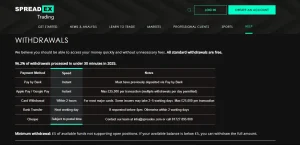
If you need the payment mechanics alongside this rule, see the Spreadex withdrawals.
Do not rely on a universal Spreadex document checklist
A common mistake is to publish a fixed list – passport, utility bill, bank statement, source-of-funds form – as though every Spreadex customer must submit all of it. The current public Spreadex pages do not support that claim for post-closure former casino users.
Instead, treat any exact request as case-specific until it appears in your account or in a message sent through an official Spreadex channel. A request can depend on which information the operator already verified electronically, whether account details have changed, whether a payment method belongs to the account holder, or whether additional due diligence is required.
Regulatory guidance provides examples of the kinds of independent evidence operators can use, but that is different from saying “Spreadex requires document X”. This distinction helps users avoid preparing unnecessary sensitive documents and prevents a generic AML list from being mistaken for current operator policy.
A practical checklist when Spreadex asks for verification
- Read the request inside the authenticated account or confirm that the message came from an official Spreadex contact route.
- Identify what fact the operator is asking you to prove – identity, address, payment ownership or another account detail – rather than sending unrelated documents.
- Check whether your name, address, date of birth, phone number and email in the account are still current.
- If the request relates to a payment method, confirm that the bank account, card or wallet is in your own name.
- Use the upload or communication channel specified by Spreadex rather than sending identity documents to an address found on an unverified third-party website.
- Keep a copy of what you submitted and note the date, especially if a withdrawal is pending.
- If the request is unclear, ask support which specific item is missing before uploading additional personal information.
- If you believe a withdrawal triggered a check that should reasonably have happened earlier, ask the operator to explain the basis for the timing of the request.
This is a process checklist, not a document checklist. It is designed to reduce unnecessary disclosure while still helping an existing customer respond efficiently.
Source of funds is not the same as basic identity verification
Basic identity verification establishes who the customer is. Source-of-funds or enhanced due-diligence work addresses a different question: where money comes from and whether activity is consistent with the information the operator holds. UK Gambling Commission guidance discusses source-of-funds information as part of risk-based due diligence and enhanced checks.
Do not assume that every Spreadex user will be asked for source-of-funds evidence, and do not infer wrongdoing merely because an operator asks for it. Risk-based controls can be triggered by transaction patterns, inconsistencies, changes in account information or other compliance factors. The available public material does not support a universal Spreadex threshold or a fixed list of evidence for former casino customers.
If a source-of-funds request appears, respond to the specific request rather than borrowing an example checklist from another gambling operator. If the wording is broad, ask what evidence is required and which period or transaction the operator is reviewing.
What if verification is blocking account access?
First, distinguish login security from regulatory KYC. Spreadex’s technical help says it verifies identity when helping with password recovery. That is a security step designed to avoid giving account access to the wrong person. A separate due-diligence review can involve different information.
If you cannot log in at all, start with the current Spreadex account access and the operator’s official password-reset or support process. If you can log in but a withdrawal is held, ask support whether the hold is a payment-route issue, an identity check or another account review. Knowing the category makes it easier to provide only the information actually needed.
For direct contact routes, see the support options. If you need the licensing context for why identity controls continue on the surviving Sports account, the Spreadex trust covers the UKGC position.
What the casino closure does not prove about KYC
The closure itself is not evidence that existing customers will face extra verification. Spreadex’s public closure notice says the company shut the casino product to focus on sports betting and that accounts and funds remain accessible. It does not say the closure created a new KYC programme, changed identity standards or imposed a special withdrawal-document rule on former casino customers.
That means a verification request should be understood on its own terms. The fact that it arrives after the closure can be relevant to the user’s journey, but it does not establish causation. Avoid treating “post-closure” as synonymous with “because of closure”.
For the product-status facts themselves, the current casino status separates what Spreadex actually announced from speculation. The available information supports a narrower finding: regulated identity and due-diligence checks remain relevant to the continuing account, but exact customer-specific evidence requests must come from Spreadex itself.
Official reference pages
Spreadex verification after casino closure
For existing UK customers, verification is now mainly relevant when it affects access to the continuing account or a withdrawal request.
Use the instructions shown in your own Spreadex account or provided by current support rather than relying on a generic document checklist.
Keep identity and payment documents within official Spreadex channels and treat any request from an unrelated site with caution.
The casino closure changes the product available, but it does not remove the need to complete legitimate account checks when Spreadex requires them.